

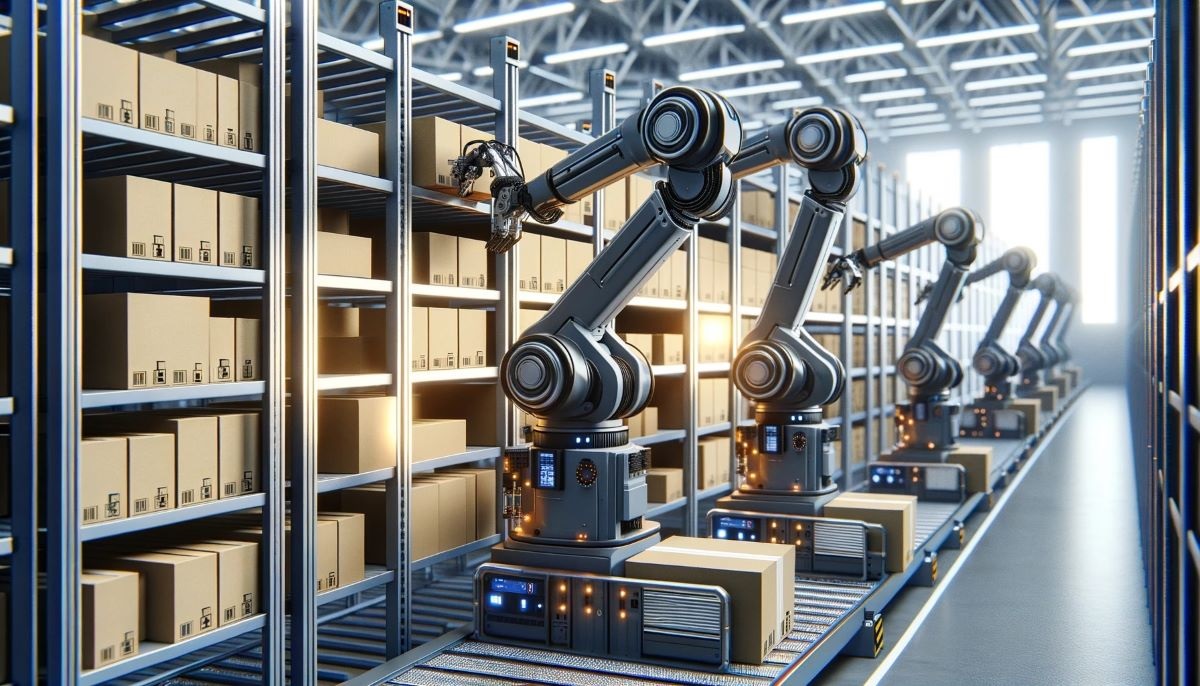
Warehouses have long rested on human labor for tasks such as picking, packing, inventory checks, and provisions handling. However, accompanying the rise of Artificial Intelligence (AI) and robotics, the character of establishment work is experiencing an important shift. This artificial intelligence warehouse is not only streamlining operations but further changing the role of human peasants in the supply chain.
The Role of AI and Robotics in Warehousing
AI orders resolve massive amounts of working data to design smarter and more effective warehouses. When linked to accompanying science, they generate a strong alliance that automates repetitive, labor-intensive tasks.
How to Reduce Labor With Robotics
1. Same Task Automation
Robots can handle concerning matter urgent tasks like lifting burdensome merchandise, moving pallets, or sorting parcels. This reduces the risk of trade harm and frees employees from irritating, labor-heavy work.
2. Enhanced Accuracy and Speed
AI-driven machines can perform tasks accompanying greater accuracy and accuracy than humans. For example, automatic picking methods use a calculating apparatus to identify and take products fast, lowering order mistakes and improving service satisfaction.
3. Shift in Workforce Skills
As AI and robotics take the place of routine tasks, warehouse tasks are evolving. Workers are immediately necessary to cultivate abilities in projecting mechanical systems, information analysis, and electronics management. This shift is constructing demand for more tech-savvy, prepared workers.
5. Flexible and Scalable Operations
During peak seasons, AI-stimulate robots can be scaled up to handle elevated workloads. This flexibility reduces confidence in temporary labor and guarantees smoother drives during demand surges.
Worker Benefits
· Improved Safety:
Automation reduces risks, guides weighty promoting, and supplies movements.
· Higher Productivity:
Tasks are achieved faster, lowering delays and ensuring orderly accomplishment.
· New Career Opportunities:
Workers gain hope to change into higher-skilled roles in appliance intelligence sustenance, AI scheme listening, and process growth.
Learn About the Drawbacks
High setup costs, trained workers’ training needs, and representative opposition to change can slow endorsement. Businesses must purchase reskilling programs and highlight in what way or manner automation complements or, by preference, replaces human labor.
The Future of Warehouse Labor
AI and robotics are not erasing human jobs but changing them. Warehouses of the future will likely dream up fewer laborers operating manual labor and more drivers managing superior systems. The result will be more reliable atmospheres, more effective workflows, and a new moment for growth in the Robotics-driven supply chain.
Conclusion
AI and electronics are redefining warehouse labor by automating repetitive tasks, enhancing protection, and creating new talent requirements for employees. Instead of replacing population, these sciences are reshaping responsibilities and enabling crowds and machines to work together. For warehouses not quite take advantage of the change, the result is a more productive, adaptable, and future-ready workforce.